Concrete patios · Kyle, Buda, San Marcos
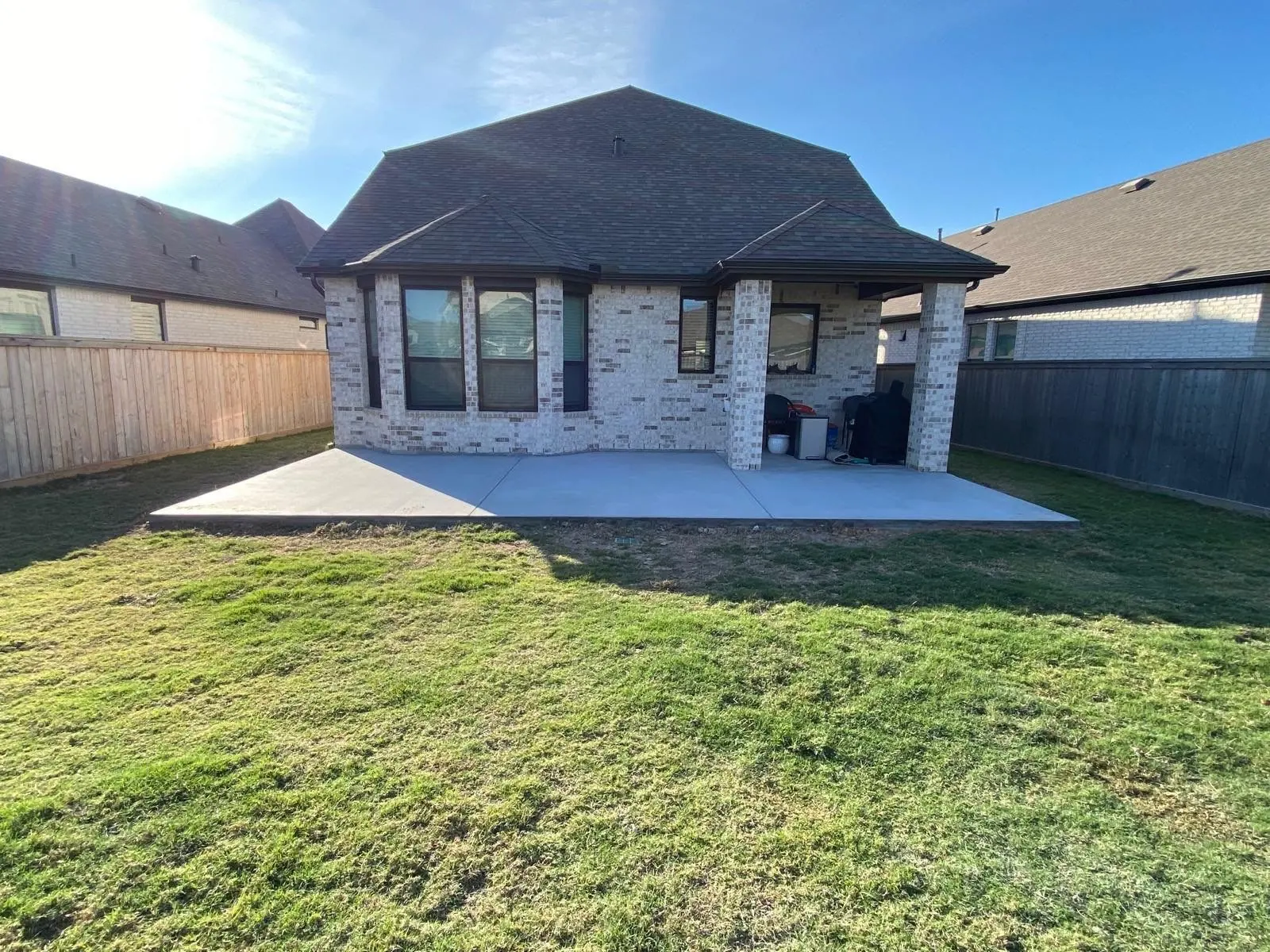
Concrete patio construction in Kyle, TX. Poured level, sloped to drain.
Poured concrete patios with integrated drainage pitch and finish options from broom to exposed aggregate.
Every patio we pour falls away from your slab, so rain leaves the back door and heads for the yard, a swale or a drain.
Concrete Patio Construction
What it is. And when it's the right call.
A new patio is the most used room of a Kyle house for most of the year. It is where the grill lives, where the kids play after school, and where you sit out once the sun drops behind the trees. It should be big enough for how you actually use it, and it should still be flat and crack-free in ten years.
We pour new concrete patios on bare yards, beside existing builder slabs, and around new pergolas and pools. Every patio starts with a site visit where we look at how water moves across your yard, what kind of soil you have, and where the patio meets the house. Then we size it, set the slope, and build the base before any concrete shows up.
A new patio makes sense when
- Your backyard is all grass and you want a place for a table, a grill or a fire pit
- The builder slab fits two chairs and nothing else
- You are adding a pergola, outdoor kitchen or hot tub and need a solid surface under it
- You want a patio that ties into a new pool deck or walkway
- Mud and worn grass by the back door are the first thing you see
Step by step
How we build a concrete patio. The part you never see does the most work.
Every step below happens on every job. The base and the slope are never the place to save money.
- 1
Read the yard
We check where rain comes off the roof, where it runs across the yard, and where it sits after a storm. The patio has to work with that water, not against it.
- 2
Lay out and size it
We mark the footprint on the ground with you so you can stand in it. Most families end up larger than they planned once they picture a table, chairs and a walkway around them.
- 3
Excavate and build the base
We dig out topsoil and roots, then place and compact crushed rock in layers. On clay we add a separator fabric so the soil does not pump up into the base over time.
- 4
Form, slope and reinforce
Forms are set so the finished surface falls away from your foundation. Reinforcement goes in at the right height inside the slab, and an expansion joint separates the patio from the house.
- 5
Pour and finish
We pour, screed, and apply your finish: broom, smooth trowel, stamped, colored or exposed aggregate. In hot weather we pour early in the day.
- 6
Cut joints and cure
Control joints are cut on time so any cracking follows the lines. The slab is kept moist while it cures, and we walk the finished patio with you before we leave.
In real life
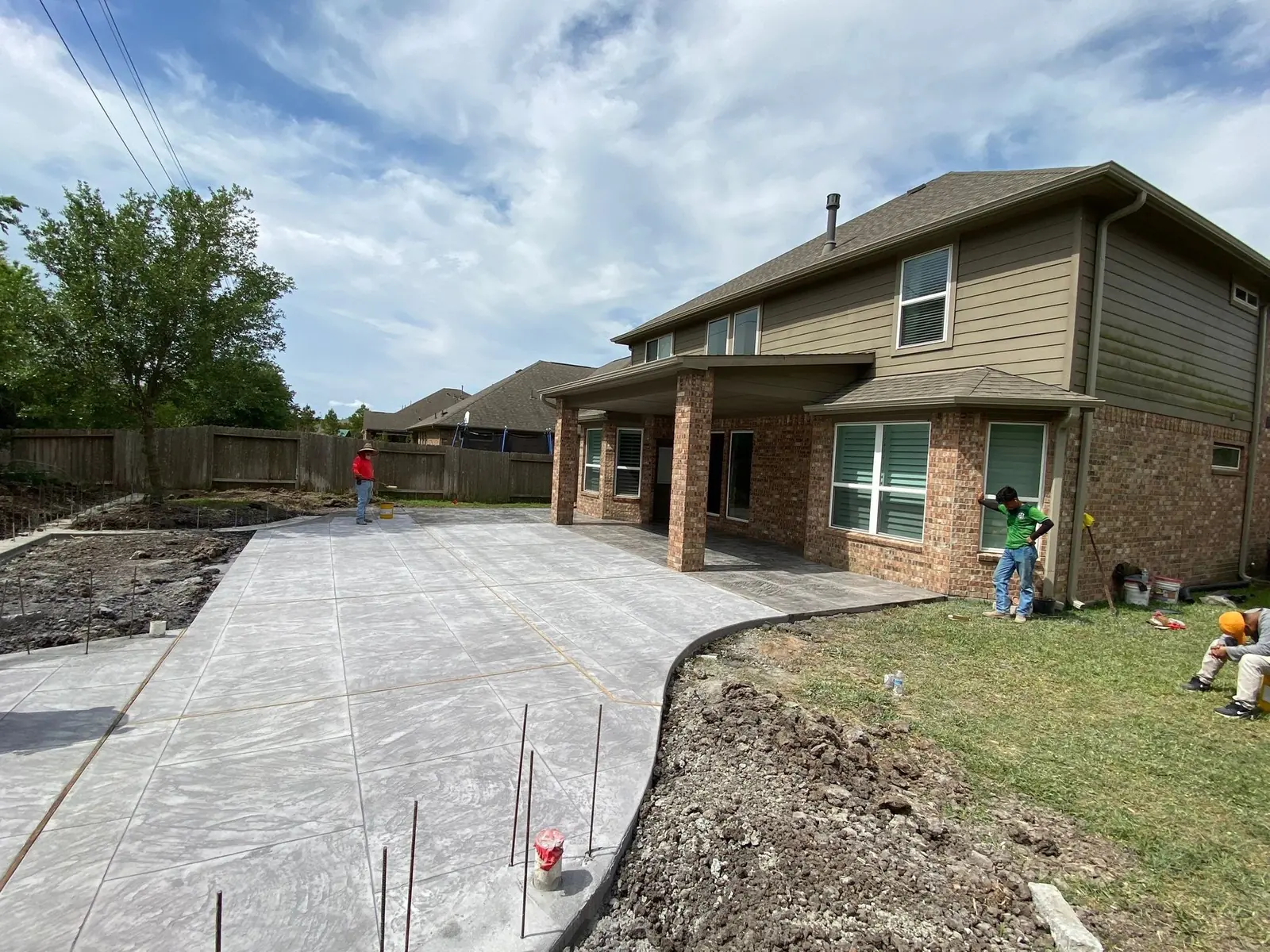
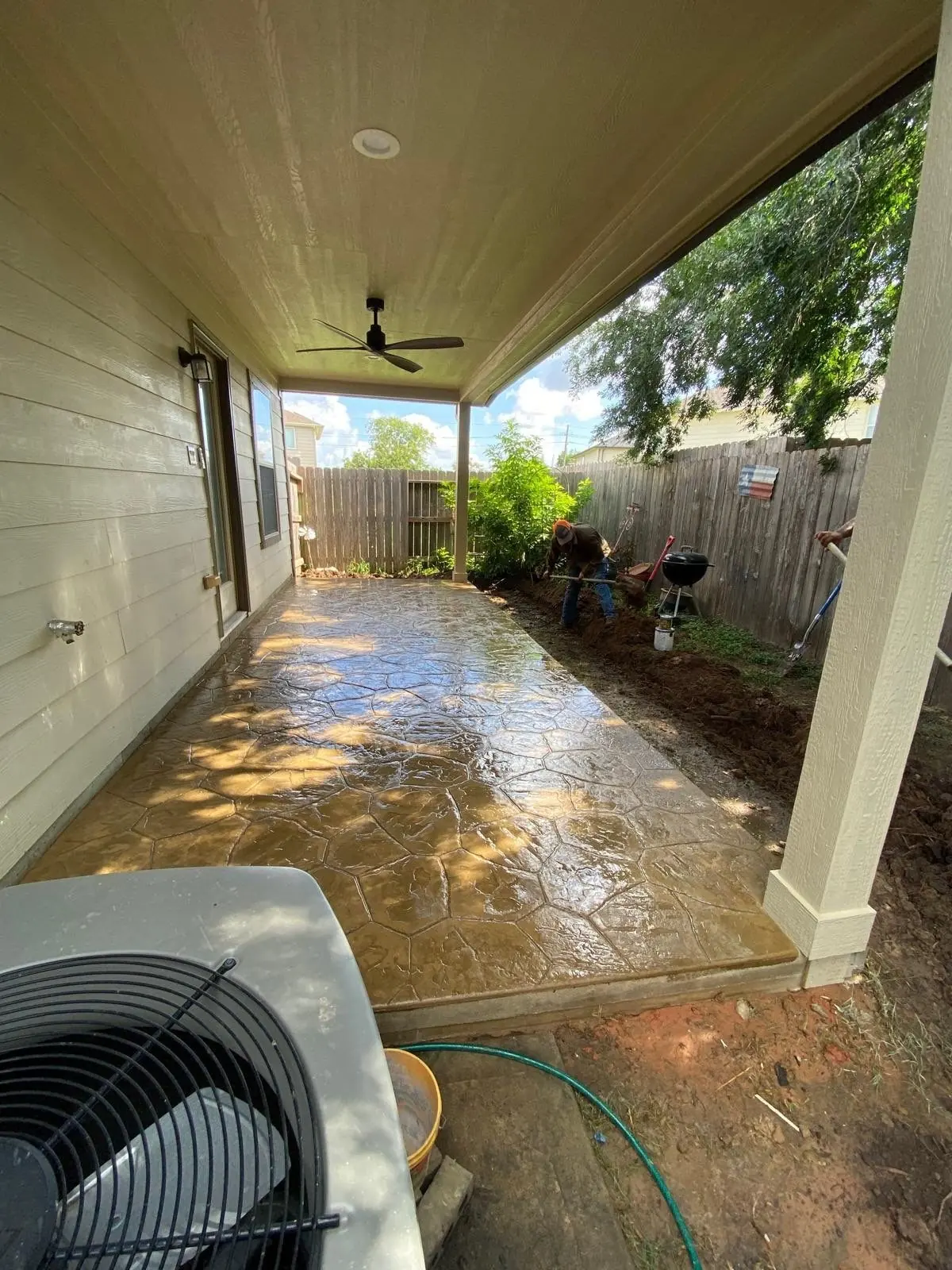
What those steps look like on a real patio construction job.
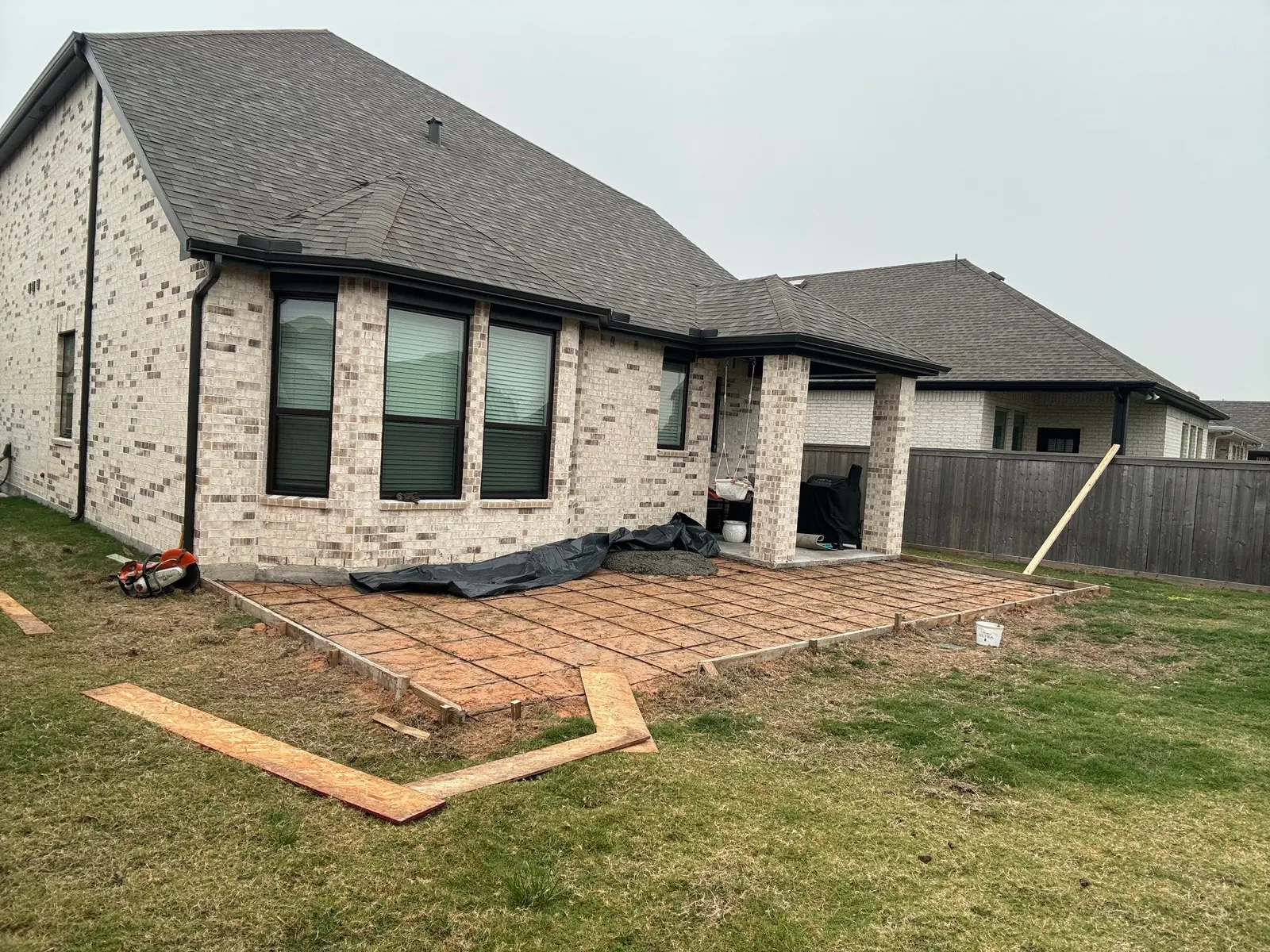
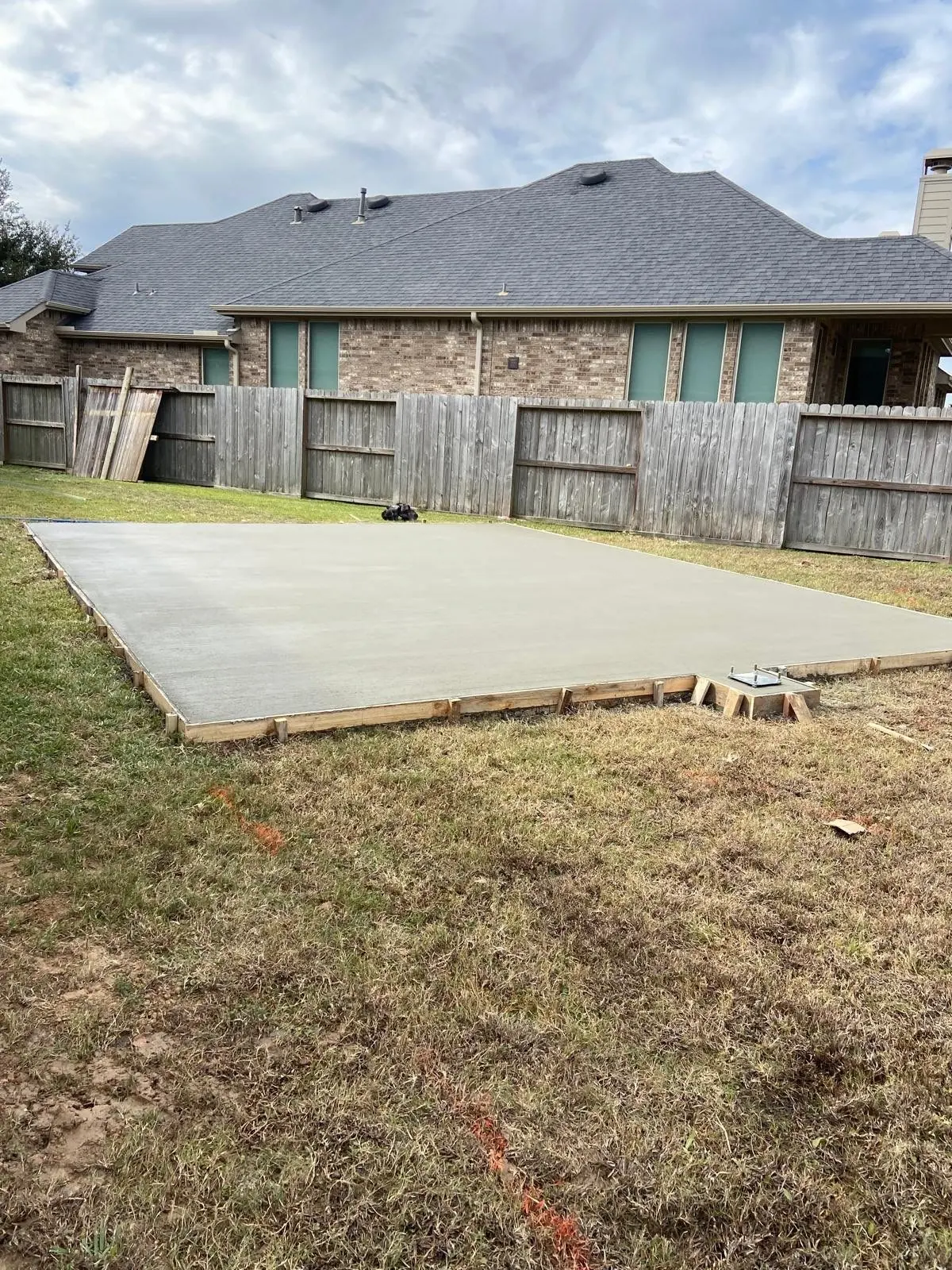
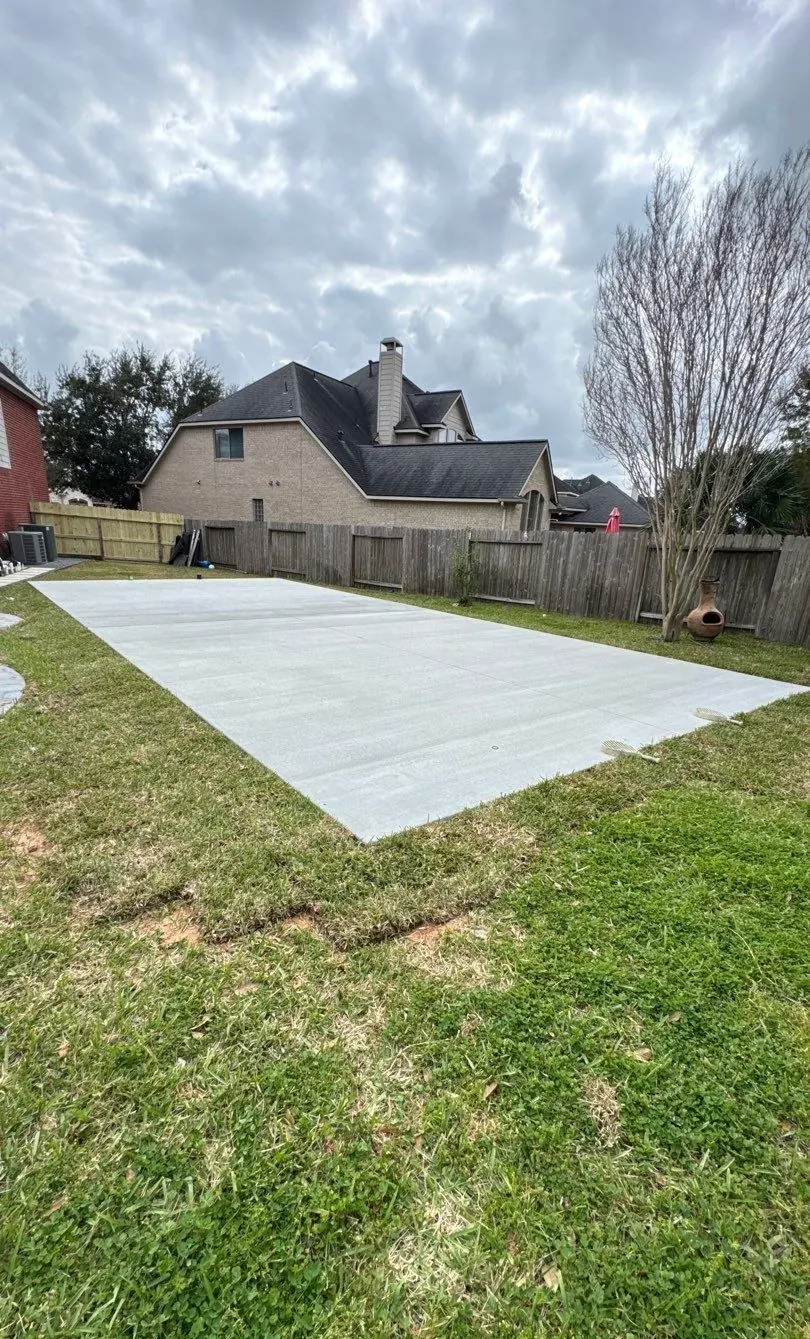
Photos are from real projects by our contractor partner. Locations are not shown.
Cutaway
What's under a patio that lasts. Base, fabric, slab, slope.
Options
Finish options. Same strong slab, your choice of surface.
Broom finish
The classic texture. Good grip, easy to clean, and the most budget-friendly choice.
Exposed aggregate
The top layer is washed back to show the stone in the mix. Very slip resistant and hides dirt well.
Stamped
Pressed with a stone, brick or wood pattern and colored to match. See our stamped concrete page.
Stained or colored
Integral color or a stain over the slab for a warmer look than plain gray.
Smooth trowel
A clean, modern look for covered patios. Best where it stays dry, since it is slicker when wet.
Pricing
What affects the price of a patio
Every yard is different, so we price after we see it. You get a realistic range in writing after the on-site assessment, before anything is formed.
- Size and shape of the patio
- How much digging, grading or fill the yard needs
- Base depth for your soil
- Finish: broom, exposed aggregate, stamped or stained
- Access for equipment and concrete trucks
- Extras like steps, seat walls, or drains tied into the patio
Local conditions
Building patios on Kyle ground
Kyle sits where Blackland Prairie clay meets the limestone edge of the Hill Country. On the clay side, soil swells when it is wet and shrinks and cracks in a dry August. A patio poured straight on that ground moves with it. A compacted crushed-rock base with fabric underneath keeps that movement from reaching the slab.
Closer to the Hill Country you may hit caliche or rock a few inches down. That changes how we dig and how we set the patio height against your door threshold. It is one more reason we look at the yard before we quote it.
Summer heat matters too. Hot, dry wind pulls water out of fresh concrete fast, which weakens the surface. From late spring through September we pour early in the morning and keep the slab damp while it cures.
Built for Hays County ground
Two soils meet here. Your patio should know which one it's on.
Kyle, Buda and San Marcos straddle the I-35 corridor between Blackland Prairie clay and the limestone edge of the Hill Country. Two yards a few miles apart can need different prep. We check before we quote.
Ground that swells and shrinks
Dark clay soaks up rain, swells, then pulls back and cracks in a dry August. A compacted base and fabric under the slab keep that movement from reaching the concrete.
Caliche and limestone near the surface
Some lots hit hard rock a few inches down. That changes how we dig, grade and set the slab height against the door threshold.
Pouring in triple digits
Hot, dry wind pulls water out of fresh concrete too fast. In summer we pour early, keep the slab damp while it cures, and cut joints on time.
From first call to first cookout
Five steps. You'll know what's next at each one.
No pressure and no surprise numbers. You get a range in writing before anything is formed.
- 1
Call or send the form
A short call about the yard, the size you want and how you'll use it.
- 2
On-site assessment
We walk the yard and check slope, soil and where water goes after a rain.
- 3
Layout and range
A drawn layout, finish options and a realistic price range in writing.
- 4
Prep and pour
Tear-out if needed, base, forms, reinforcement, then the pour and finish.
- 5
Cure and walkthrough
We walk it with you, go over care, and explain your warranty.
Service areas
Patio construction near you. Kyle, Buda and San Marcos.
Kyle
Buda
FAQ
Concrete Patio Construction: your questions.
Don't see yours? Call or text (512) 555-0100 and ask.
How big should my patio be?
Plan for the furniture plus room to walk around it. A dining table with six chairs needs a lot more space than most builder patios give you. During the assessment we mark it out on the ground so you can see it before we pour.
Do you add drainage with the patio?
Every patio is pitched away from the house. If the yard already holds water, we can add a drain or reshape the grade as part of the project so the new patio does not push water somewhere worse.
Can the patio go under a pergola or patio cover?
Yes. If a cover or pergola is planned, we plan its post locations with the slab so the footings and the concrete work together.
How long does a new patio take?
Most patios take a few days of work from excavation to finish, plus curing time before heavy furniture goes on. Your crew lead gives you exact timing for your pour and the forecast that week.
Ready to picture it? We'll mark the patio out on your lawn at the assessment.
Book a patio assessmentOther services
Everything concrete, patios first.
Patio Tear-Out and Rebuild
Removal of a cracked, sloped, or undersized patio and a new one built larger, level, and draining away from the house.
See tear-out and rebuildStamped Concrete
Decorative, colored, and textured concrete with stone, brick, or wood patterns, fiber-reinforced and properly jointed for Central Texas heat. Includes stained and colored finishes that elevate standard slabs.
See stamped and stainedConcrete Pool Decks
Anti-slip pool deck surfaces in stamped, brushed, or exposed aggregate finish, designed to drain away from the pool edge.
See pool decksConcrete Driveway Installation
New driveways built on compacted base with proper reinforcement and pitch so water drains away from the garage.
See drivewaysConcrete Repair
Crack repair, section replacement, and leveling for driveways, sidewalks, patios, and steps.
See repairConcrete Walkways
Broom finish, stamped, and exposed aggregate walkways poured on a compacted base with control joints.
See walkwaysReady when you are
Your back yard, finished.
Tell us what you want out back. We'll walk the yard, check the water and the ground, and give you a layout and a range you can plan around.